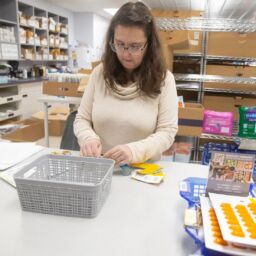
St. Vincent de Paul, Cincinnati invites the community to celebrate the grand opening of its new Charitable Pharmacy, located in a space adjacent to its existing thrift store in Milford, OH.
Using Public Health Detailing to Increase Access and Confidence in COVID-19 Vaccines and Reinvest in Disproportionately Impacted NYC Communities Go…
Around one fourth of the United States population does not have adequate health literacy.
Health literacy is defined as the ability to obtain, read, understand, and apply healthcare
information
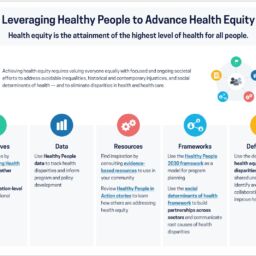
Healthy People 2030 Leveraging Healthy People to Advance Health Equity Health equity is the attainment of the highest level of health for all people. “Eliminate health disparities, achieve health equity, and attain health literacy to improve the health and well-being of all.”
Charitable Pharmacies of America organization member receives Health Equity grant
Good Pill will provide direct access to hundreds of life-saving medications and save families $150+/month on healthcare cost
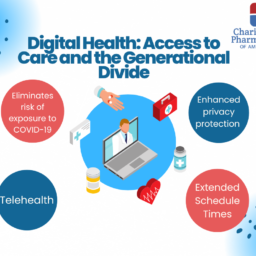
Just as banks have helped seniors bridge the digital divide and leverage online banking to better manage their money, healthcare organizations need to help older adults leverage digital technology to better manage their health.
The term digital divide is defined as the differences
of economic and social inequality in both access and usage of ICTs. 2, 3 Some population groups that are
affected by the digital divide include uninsured, at or below 300% of the Federal Poverty Level (FPL), lack
of internet access, etc
How a ‘weighted lottery’ helped underserved patients get a scarce Covid drug
An opportunity for charitable pharmacies to collaborate with oncology practices for non-oncology medications during and after treatment.
How is a charitable pharmacy different from other types of pharmacies?
FDA approves 1 Year delay of Track & Trace requirements
This study represents a rigorous, multi-state evaluation that highlights the impact of a charitable medication access program on hospital utilization for the medically under-served population.
More than 34 million people in the United States were living in food insecure households in 2021, a decline from 38 million in 2020. The combination of the expanded child tax credit, Supplemental Nutrition Assistance Program benefits, and private donations all contributed to reducing food insecurity during the pandemic. Still there is much more work to be done, with food costs spiking 11.4%, the largest annual increase since 1979, inflation factors could easily cause food insecurity to grow.
Uninsured adults and those in worse health continue to report higher rates of not getting care due to costs
In 2011, the opioid crisis reached astounding levels with over 21,000 deaths adding to the urgency of providing aid to those who most need it