
Related Posts

CMM in Team-Based Care
The Outcomes of Implementing and Integrating Comprehensive Medication Management in Team-Based Care: A Review of the Evidence on Quality, Access and Costs, December 2023
SIRUM brings Non-profit Pharmacy to Illinois
Good Pill will provide direct access to hundreds of life-saving medications and save families $150+/month on healthcare cost
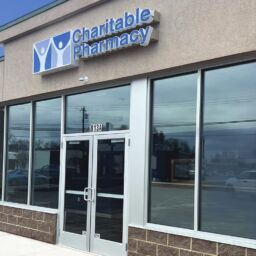
Milford SVdP Pharmacy Grand Opening
One in four Americans say they struggle to afford their prescription medications. The establishment of this Charitable Pharmacy in Milford will allow patients who live east of Cincinnati better access to care.

More free US COVID-19 tests, $600M production boost
Starting Sept. 25, Americans can again order free COVID-19 tests through the federal government.
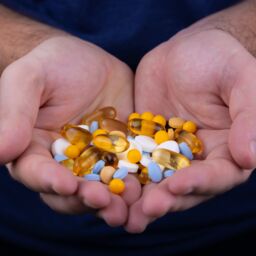
Medicine for Patients in Need
An opportunity for charitable pharmacies to collaborate with oncology practices for non-oncology medications during and after treatment.
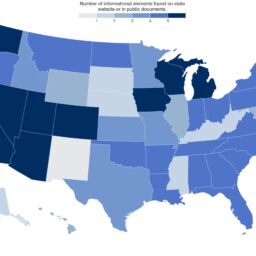
Impact of changes in Medicaid related to COVID
We estimate that if the PHE expires in April 2023, 18.0 million people will lose Medicaid coverage in the following…
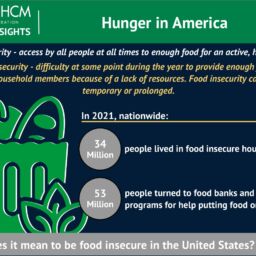
Hunger in America
More than 34 million people in the United States were living in food insecure households in 2021, a decline from 38 million in 2020. The combination of the expanded child tax credit, Supplemental Nutrition Assistance Program benefits, and private donations all contributed to reducing food insecurity during the pandemic. Still there is much more work to be done, with food costs spiking 11.4%, the largest annual increase since 1979, inflation factors could easily cause food insecurity to grow.
Potential Funding Opportunities in Your State
Federal/state grants are not the only gateways to funding. There are close to 750 “community foundations” nationwide which are public charities dedicated to improving the lives of people in a defined local geographic area.
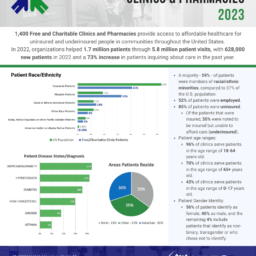
NAFC Infographics & Reports
Want to learn more about Free and Charitable Clinics, Charitable Pharmacies and the medically underserved?

End of the Public Health Emergency Factsheet
Charitable Pharmacies of America organization member receives Health Equity grant

Fireside Chat with Baeder and Cuban, Entrepreneur and Cost Plus foundeR
A Fireside Chat with AAM Chair, Christine Baeder and Mark Cuban, Entrepreneur and Cost Plus founder
TAKING ON THE OPIOID OVERDOSE EPIDEMIC IN NEW JERSEY
Three Healthcare Organizations Join Forces to Save Lives
What PHE’s imminent end means for pharmacists
The pharmacy industry sees at least five changes
How does cost affect access to healthcare?
Uninsured adults and those in worse health continue to report higher rates of not getting care due to costs

Charitable Pharmacies: What They Are and How They Help People Access Medications
How is a charitable pharmacy different from other types of pharmacies?